


 PLATFORM UPDATE:

Influence of thermosonication on the physicochemical, techno-functional, bioactive, microbiological and sensory properties of tiger nut (Cyperus esculentus L.) milk
 *a
and
*a
and
Abstract
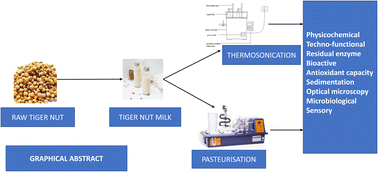
Emerging food processing techniques such as thermosonication (TS) for plant-based milk present a novel and promising research approach. In this study, tiger nut milk subjected to pasteurisation (90 °C for 60 s) and thermosonication (frequency: 45 kHz; power: 200 W; amplitude: 100%; temperature: 40, 50 and 60 °C; time: 5, 10 and 15 min) was analysed for its physicochemical, techno-functional, bioactive, antioxidant, microstructural, enzymatic, microbiological and sensory properties. Both treatments had no impact on the pH, total soluble solids and titratable acidity, while TS significantly (p < 0.05) reduced the sedimentation index (4.31–3.52%), residual enzyme peroxidase activity (100.0–6.30%) and polyphenol oxidase activity (100.0–5.14%). Comparatively, TS increased the contents of ascorbic acid (6.95–8.35 mg/100 mL), total phenols (22.50–28.03 mg GAE/100 mL), flavonoids (16.01–30.19 mg/100 mL), and carotenoids (8.05–13.04 mg/100 mL) and improved the antioxidant capacity (41.98–68.98%). Moreover, the optical micrograph showed reduced particle size to a non-visible level with increasing TS treatment, while the total bacterial and yeast/mould population reduced from 5.45 and 4.46 log CFU per mL to a non-detectable level, respectively. The sensory parameters slightly improved during TS treatment, with the mean scores above average. Notably, the TS treatment at 45 kHz and 50 °C presented the best thermosonication regime for the tiger nut milk sample, while treatment at 45 kHz and 60 °C elicited impaired changes to most of the milk properties. Hence, the use of thermosonication in enhancing the quality and economic value of tiger nut milk is technically feasible as an alternative to thermal processing.
 Please wait while we load your content...


