


 PLATFORM UPDATE:

Extraction technologies for hemp seed oil: a comparative study of yield, bioactive compound extractability, and oxidative stability
 a
and
Farid
Mansouri
*ac
a
and
Farid
Mansouri
*ac
Abstract
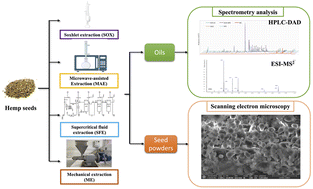
An integrated comparison of four extraction methods was carried out to evaluate their performance in terms of hemp seed oil yield, physicochemical characteristics, and bioactive compound extractability. The methods included Soxhlet extraction (SOX-HPE) using a ternary solvent system (hexane/ethyl acetate/2-propanol; 4/4/2), microwave-assisted extraction (MAE) with 7.5% ethanol, supercritical fluid extraction (SFE) with 10% ethanol, and mechanical extraction (ME). Microstructural changes in the seed powders were also examined using scanning electron microscopy to better understand the mechanisms of cell wall disruption. SOX-HPE provided the highest oil yield (33.24%), followed by MAE and SFE (30.69 and 30.51%, respectively). HPLC-DAD/ESI-MS2 analysis identified 29 phenolic compounds, with the highest total concentrations observed in oils from SOX-HPE and SFE (131.29 and 71.92 mg kg−1 oil, respectively), including elevated levels of N-trans-caffeoyltyramine (39.98 and 14.92 mg kg−1 oil), cannabisins B (10.79 and 7.63 mg kg−1 oil) and A (7.98 and 3.79 mg kg−1 oil), which contributed to excellent oxidative stability (37.77 and 28.01 hours, respectively at 100 °C). SFE oil was also rich in unsaturated fatty acids (90.03%) and exhibited favorable oil quality indices. MAE produced oil enriched in tocopherols (510.66 mg kg−1 oil), chlorophylls (99.68 mg kg−1 oil), and carotenoids (27.31 mg kg−1 oil). These findings highlight the importance of selecting appropriate extraction techniques to optimize both the nutritional quality and functional potential of hemp seed oil. In particular, SFE, especially when combined with a green polar co-solvent, emerged as an efficient and environmentally sustainable method for producing high-quality hemp seed oil. The use of less toxic polar solvents in Soxhlet extraction also demonstrated promising potential for enhancing bioactive compound recovery while reducing solvent-related hazards.
 Please wait while we load your content...


