


 PLATFORM UPDATE:


Alkaline ammonia electrolysis in a membrane electrode assembly cell: parameter optimization and dynamic operation

Abstract
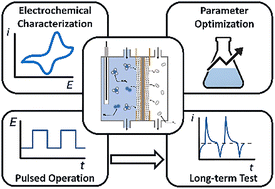
Hydrogen could potentially play an important role in decarbonizing hard-to-abate sectors where electrification is not viable. Due to lower density, storing and transporting hydrogen in its pure form as compressed gas or liquid poses significant challenges. Ammonia is considered a potentially viable solution as a hydrogen carrier due to its higher volumetric energy/hydrogen density and mature infrastructure. It can act as a medium to store and transport hydrogen. However, extracting hydrogen from ammonia currently relies on energy-intensive thermal cracking. While ammonia electrolysis, based on thermodynamics, may offer a more energy-efficient alternative to thermal cracking, catalyst-related challenges such as high overpotential and poisoning still hamper its prospects. This study explores the prospects of ammonia electrolysis through optimization of cell design and operational parameters, and the use of dynamic operation protocols for long-term operation. In specific, the work highlights the promise of the membrane electrode assembly (MEA) cell design for ammonia electrolysis: operational parameters of flow rate, electrolyte composition including ammonia concentration, pH, and cation identity are studied to evaluate their impact on MEA performance. Their optimization led to a peak current density of over 600 mA cm−2 at RT and higher at elevated temperature. Furthermore, a pulsed electrolysis approach addresses catalyst poisoning issues, allowing the MEA cell to operate continuously for over 100 hours. These findings lay the groundwork for efficient ammonia electrolysis systems, supporting the broader adoption of ammonia as a viable hydrogen carrier to support a future and more sustainable hydrogen economy.
 Please wait while we load your content...


