


 PLATFORM UPDATE:


Sodium hypochlorite oxidation of imazalil: mechanistic insights and byproduct profiling

Abstract
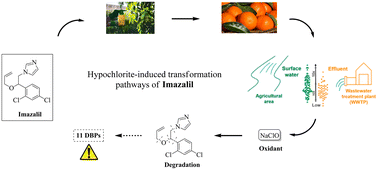
Imazalil is a broad-spectrum fungicide widely used in the post-harvest treatment of citrus and other fruits, and it's frequently detected in surface waters and wastewater due to its high persistence and the limited removal efficiency of conventional treatment processes. This study evaluates the degradation of imazalil in the presence of sodium hypochlorite, an oxidizing agent commonly employed in water disinfection. Using spectroscopic and chromatographic techniques, eleven degradation byproducts were isolated and characterized, and a reaction mechanism for their formation was proposed. The results show that imazalil chlorination is a rapid and efficient process, achieving more than 75% removal of the initial concentration under optimal conditions (pH 11.5, 25 °C, NaClO/imazalil molar ratio ≈ 15). Some DBPs exhibit structural characteristics associated with potential genotoxicity, as reported in the literature. Future studies will involve testing in real water matrices, targeted analyses to validate the proposed pathways and quantify DBPs under realistic operating conditions, and dedicated toxicology investigations to assess their hazard and risk. Overall, this research contributes significantly to understanding the transformation processes of imazalil during water disinfection, highlighting both the efficacy of chlorination as an environmental abatement method and the need to carefully evaluate the risks associated with the secondary byproduct formation.
- This article is part of the themed collection: Recent Open Access Articles - Environmental Science: Water Research & Technology
 Please wait while we load your content...


