


 PLATFORM UPDATE:


Emerging investigator series: why we should care about the fate of biological contaminants from municipal wastewater in reverse osmosis concentrate

Abstract
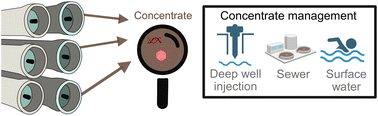
Potable reuse, the use of treated wastewater for drinking, is becoming more common globally. Reverse osmosis is a treatment technology employed in potable reuse treatment trains because it is a physical barrier to most biological and chemical contaminants, but it produces a concentrate stream that must be managed. The concentrate includes chemical contaminants of concern, which are an emerging topic of research, but we were not able to identify studies characterizing biological contaminants in reverse osmosis concentrate from municipal wastewater. In this perspective, we i) determine how common the use of reverse osmosis is in potable reuse globally; ii) determine current management practices for concentrate globally; iii) identify biological contaminants that may be present in reverse osmosis concentrate; and iv) summarize factors that need further research to assess the fate of biological contaminants from wastewater in reverse osmosis concentrate. Factors identified that needed further research included the effects of reverse osmosis concentrate composition (e.g., salinity and heavy metal content) and the effectiveness of concentrate treatment technologies for biological contaminants. In addition, we identified that discharge of reverse osmosis concentrate to the ocean (11/22 coastal facilities) or to other surface water bodies (4/7 inland facilities) were the most common reverse osmosis concentrate management strategies for coastal and inland potable reuse facilities, respectively. Ultimately, concentrate from these facilities was discharged to surface water bodies, either directly or through sewer discharge, which highlights the potential for human exposure that depends on the uses of the receiving surface water bodies. To our knowledge, this is the first summary of concentrate management practices of global potable reuse facilities. This work will inform future research and regulatory decisions about reverse osmosis concentrate treatment and management.
- This article is part of the themed collections: Environmental Science: Water Research & Technology Recent Review Articles and Emerging Investigator Series
 Please wait while we load your content...


