


 PLATFORM UPDATE:


Floc density-driven bacterial community succession orchestrates antibiotic resistance dissemination in activated sludge
 *a
*a
Abstract
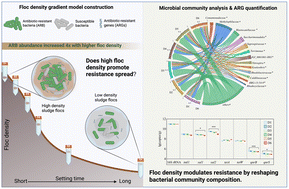
In biological wastewater treatment units, bacteria can self-assemble into flocs with heterogeneous structural characteristics. These flocs, varying in density, create dynamic microenvironments that reshape bacterial community assembly and influence the dissemination of antibiotic resistance, a process that is not yet fully understood. This study investigated the evolution of antibiotic resistance across floc density gradients to elucidate the key driving mechanisms. An increase in floc density from 1.0020 g mL−1 to 1.0029 g mL−1 triggered a fourfold rise in the absolute abundance of antibiotic-resistant bacteria (ARB) (p < 0.05), with their relative abundance increasing from 64% to 89%. Microbial community analysis revealed significant shifts at both the phylum and genus levels across varying floc densities (p < 0.05), likely driven by floc density-mediated changes in nutrient availability. Notably, the resource-sensitive Methylophilaceae declined in denser flocs, whereas the nutrient-tolerant Saccharimonadales and Blastocatellaceae proliferated. Furthermore, both the absolute and relative abundances of key antibiotic resistance genes (ARGs), including class 1 integron (intI1), sulfamethoxazole- (sul1 and sul2) and ciprofloxacin-related resistance genes (qnrB and qnrS), increased with increasing sludge density. Particularly, sul1 and sul2 exhibited 1.9-fold and 4.5-fold upregulations, respectively (p < 0.05). These findings highlight strong linkages among floc density, bacterial community composition and antibiotic resistance profiles, suggesting that floc density modulates resistance by reshaping the bacterial community composition in activated sludge. This study provides insights into the ecological mechanisms governing antibiotic resistance in wastewater treatment systems, aiding improved risk assessment and management strategies.
- This article is part of the themed collection: HOT articles from Environmental Science: Water Research & Technology
 Please wait while we load your content...


