


 PLATFORM UPDATE:


Transformation and immobilization of sedimental galena (PbS) by phosphate from surface runoff in simulated storm suspensions
 *ab
and
*ab
and
Abstract
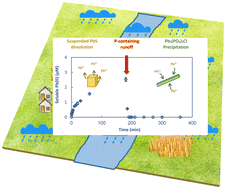
Sedimental galena (PbS) is an important sink for lead in natural waters. Resuspension of PbS caused by storm disturbance can lead to its oxidative dissolution, resulting in higher ecological risks. Surface runoff resulting from intensive storms can also carry phosphate into receiving water bodies. It is hypothesized that phosphate from surface runoff can regulate Pb concentration and speciation during storm events. To test the hypothesis, the dissolution and transformation of PbS were investigated in the absence and presence of orthophosphate under different pH (5–8) and dissolved oxygen (0–8.4 mg L−1) conditions to simulate the behaviors of suspended PbS. The results indicated that the kinetics of PbS dissolution was mainly controlled by pH while dissolved oxygen played a minor role when orthophosphate was absent. In the presence of orthophosphate (0.5 mg-P L−1), the soluble lead concentration as high as 990 ppb resulting from PbS dissolution decreased immediately to ND (<5.1 μg L−1), except at pH 5, due to the formation of pyromorphite. A saturation index (SI) greater than 16.16 was required to initiate pyromorphite precipitation. The results suggested that phosphate, which is often associated with eutrophication, could sequester soluble lead and reduce associated ecological risks resulting from sedimental PbS dissolution in storm events.
- This article is part of the themed collection: HOT articles from Environmental Science: Water Research & Technology
 Please wait while we load your content...


