


 PLATFORM UPDATE:


Effect of synthesis temperature on lemon juice-derived carbon quantum dots: valorization into TiO2 composites for tetracycline removal
 *a
*a
Abstract
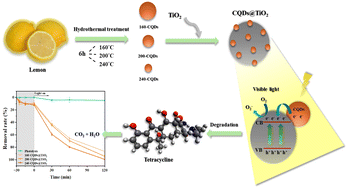
Carbon quantum dots (CQDs) are emerging nanomaterials that exhibit remarkable photoluminescence, electrical conductivity, and tunable surface functionalities, making them highly versatile for diverse applications. Among these, the integration of CQDs with TiO2 has attracted significant attention for designing efficient visible-light responsive photocatalysts. In this study, lemon juice was employed as a green carbon precursor to synthesize CQDs at three different temperatures (160 °C, 200 °C, and 240 °C), with the goal of developing eco-friendly photocatalytic composites. The effect of synthesis temperature on the physicochemical and photocatalytic properties of the CQDs was systematically investigated. The results revealed that higher synthesis temperatures promoted greater carbonization of the CQD core and increased abundance of hydrophilic functional groups on the CQDs' surface. CQDs synthesized at elevated temperatures also exhibited improved photoluminescence intensity and quantum yield, which were directly correlated with improved photocatalytic activity. When incorporated with TiO2, the successful formation of CQDs@TiO2 composites via hydrogen bonding was confirmed, and the higher particle yield and surface functionality of CQDs at 240 °C facilitated greater composite loading. Consequently, the 240-CQDs@TiO2 composites demonstrated enhanced visible-light photocatalytic performance by promoting charge separation, leading to superior tetracycline degradation across different water matrices. This study, therefore, established the optimal synthesis temperature for sustainable CQDs production and elucidated the relationship between thermal synthetic conditions and photocatalytic efficiency in CQDs@TiO2 composites.
 Please wait while we load your content...


