


 PLATFORM UPDATE:

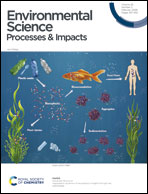
Characteristics and mechanisms of dissolved organic matter leached by photodegradation of polyethylene microplastics: role of adsorbed antibiotics
 *ad
and
*ad
and
Abstract
The photoaging of polyethylene microplastics (PE MPs) and their interactions with co-contaminants such as ofloxacin (OFL) play a critical role in shaping the composition and characteristics of dissolved organic matter (DOM) in aquatic environments. This study systematically investigates the characteristics and leaching mechanisms of DOM from pristine PE and PE-adsorbed OFL (PE-OFL) under prolonged ultraviolet irradiation. Molecular weight (MW) fractionation revealed that UV exposure significantly enhanced DOM release from pristine PE, with low-MW fractions (<1k Da) dominating (75.6–98.3% of total DOM). In contrast, PE-OFL initially released high-MW compounds (44.9–51.8% > 1k Da), which transitioned to low-MW dominance. Two-dimensional correlation spectroscopy of FTIR spectra indicated that photolytic degradation of pristine PE primarily involved –CH2 groups, while C–O groups were dominant in PE-OFL, reflecting OFL-induced alterations in photolytic pathways. Energy-dispersive X-ray spectroscopy and X-ray photoelectron spectroscopy demonstrated that OFL adsorption substantially increased surface oxidation, with a 2.4-fold elevation in O/C ratios and enhanced carboxylation (77.5% C![[double bond, length as m-dash]](https://www.rsc.org/images/entities/char_e001.gif) O content vs. 32.8% in PE). These findings elucidate that OFL acts as both a photosensitizer and an electron shuttle, accelerating PE backbone scission via reactive oxygen species generation while temporarily stabilizing high-MW intermediates. Overall, the findings highlights that contaminant-laden MPs exhibit distinct DOM profiles compared to pristine MPs, emphasizing the necessity of considering co-pollutant interactions in environmental risk assessments.
O content vs. 32.8% in PE). These findings elucidate that OFL acts as both a photosensitizer and an electron shuttle, accelerating PE backbone scission via reactive oxygen species generation while temporarily stabilizing high-MW intermediates. Overall, the findings highlights that contaminant-laden MPs exhibit distinct DOM profiles compared to pristine MPs, emphasizing the necessity of considering co-pollutant interactions in environmental risk assessments.

- This article is part of the themed collection: Transformation products, mixtures, and vectors
 Please wait while we load your content...


