


 PLATFORM UPDATE:


Development of models and a tool (DBPCytoGenoTOX Predictor) for predicting the cytotoxicity and genotoxicity of disinfection byproducts
 a
and
X. H.
Yang
*a
a
and
X. H.
Yang
*a
Abstract
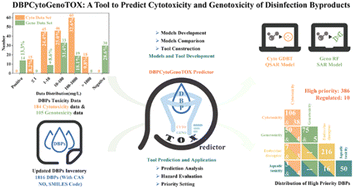
Disinfection byproducts (DBPs) have been receiving global attention because they may have detrimental effects on organisms. Cytotoxicity and genotoxicity are two toxicity endpoints that are of wide concern in the field of DBP hazard assessment. Hitherto, only around one hundred out of thousands of identified DBPs had available experimental cytotoxicity and genotoxicity data. It is important to fill this data gap of thousands of DBPs by employing an efficient and high-throughput method. Herein, we first summarized the extensive and heterogeneous cytotoxicity (184-DBPs) and genotoxicity (105-DBPs) data sets related to DBPs. Then, quantitative and qualitative models with acceptable internal and external prediction performance were developed for cytotoxicity and genotoxicity, respectively. Next, a user-friendly tool named “DBPCytoGenoTOX Predictor” was developed using the optimal models. This tool was further applied to fill the missing cytotoxicity and genotoxicity data gaps of an updated DBP inventory with 1816 substances. Finally, the high-priority DBPs were screened from the DBP inventory based on the experimental and predicted cytotoxicity and genotoxicity data as well as the previously reported endocrine-disrupting effects and aquatic toxicity data. As a result, 385 high-priority DBPs were identified. More efforts should be taken to confirm the potential adverse effects of these high-priority DBPs on organisms in the future.
 Please wait while we load your content...


