


 PLATFORM UPDATE:


Polycyclic aromatic hydrocarbon removal from stormwater runoff by bioretention cells: a review
 *a
*a
Abstract
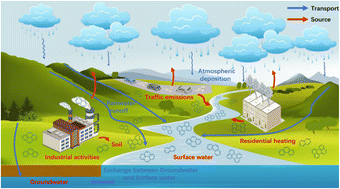
Polycyclic aromatic hydrocarbons (PAHs) are detrimental to human health and the environment as a hazardous persistent organic pollutant of environmental concern. Research is emerging on the occurrence, form, migration characteristics and removal of PAHs from runoff stormwater by bioretention cells. This review analyses the sources of PAHs, the characteristics of their concentration distribution and their migration pattern in stormwater runoff. The mechanism of PAH removal by bioretention cells, the purification effects of different fillers and their influencing factors, and the accumulation characteristics of PAHs in bioretention cells are analysed, and the influence mechanism of PAH accumulation on the performance of bioretention cells is summarised. It is noteworthy that the typical concentration range of polycyclic aromatic hydrocarbons (PAHs) in urban stormwater runoff is 0.65–13.4 µg L−1. The average PAH concentrations in surface runoff vary across different functional zones, with levels in industrial and commercial areas generally being significantly higher than those in residential areas, green spaces, and other functional zones. Studies have shown that the overall removal efficiency of PAHs by bioretention cells can consistently exceed 80%, demonstrating their significant potential for pollution control. Based on existing research progress, this review further proposes that future efforts should focus on the following research directions: (1) induction of the decomposition of PAHs accumulated in bioretention cells into degradable products; (2) search for more effective fillers to improve their removal efficiency; (3) effects of PAH contamination on microbial functions in the filler of bioretention cells; and (4) synergistic effects of PAHs with other pollutants on bioretention cells. This review evaluates the actual PAH removal performance of bioretention facilities, which holds significant scientific and practical value for optimizing the design of low-impact development facilities and ensuring the safety of the urban water environment.
- This article is part of the themed collection: Environmental Science: Processes & Impacts Recent Review Articles
 Please wait while we load your content...


