


 PLATFORM UPDATE:


Tuning the surface nanoroughness of the recombination junction for high-performance perovskite–silicon tandem solar cells

Abstract
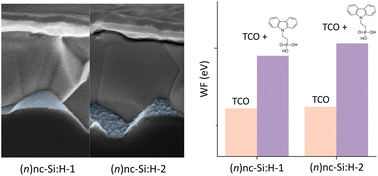
The monolithic integration of perovskite top cells on textured crystalline silicon affords efficient tandem devices with strong prospects for large-scale applications. Such integration has primarily relied on state-of-the-art recombination junctions, which typically comprise transparent conductive oxides and molecular self-assembled monolayer (SAM) contacts. However, the potential influence of bottom cell nanoroughness, which may vary based on specific processing routes and technologies, has received far less attention. Here, we systematically engineered the top surface nanoroughness of silicon heterojunction solar cells to examine its impact on monolithic perovskite–silicon tandem solar cells. We employed two approaches: (i) varying the thickness of (n)-type hydrogenated nanocrystalline silicon ((n)nc-Si:H) layers or (ii) applying a plasma treatment using a hydrogen and carbon dioxide gas mixture before the deposition of (n)nc-Si:H layers. Both methods enhanced the conductivity and crystallinity of (n)nc-Si:H layers and increased the surface nanoroughness, with plasma treatment enabling the efficient realization of distinct nanoroughness in thin (n)nc-Si:H (15-nm-thick) layers. Our results reveal that the surface nanoroughness imposed by (n)nc-Si:H layers influences the SAM anchoring, leading to increased work function shifts and improved SAM/perovskite interface quality, thereby impacting the overall tandem device performance. Notably, tandem devices incorporating higher-nanoroughness bottom cells achieved increased fill factors, dominating the observed tandem efficiency enhancements, with a peak efficiency of 32.6% enabled by a 30-second-long plasma treatment.
- This article is part of the themed collection: EES Solar Recent HOT Articles
 Please wait while we load your content...


