


 PLATFORM UPDATE:


Synergistic boosting of electrical output of moisture-electric generator based on CCNF-LiCl-PAM hydrogel
 *abc
*abc
Abstract
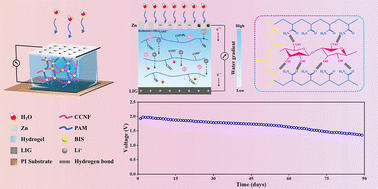
Moisture-electric generators (MEGs) that convert the chemical potential energy of atmospheric moisture into electricity through directional ion diffusion hold great promise in the development of sustainable energy. However, current MEGs still encounter considerable challenges with low electrical output and rapid voltage decay due to an insufficient ion concentration gradient and low-efficiency ion migration. Herein, we develop a high-performance MEG based on a carboxylated cellulose nanofiber (CCNF)/LiCl-embedded polyacrylamide (PAM) hydrogel (CLP) sandwiched between laser-induced graphene (LIG) and porous Zn electrodes. The incorporation of CCNF into the PAM hydrogel enables an abundance of dissociated ions and efficient ion transport channels. Synergistic enhancement by the hygroscopic LiCl, the functional groups of CCNF, and interfacial reactions at the Zn electrode achieves a strong moisture gradient, high-efficiency ion transport, and continuous ion supply in the CLP-MEG, thus yielding remarkable electrical outputs of 1.92 V and 2.44 mA cm−2 at 60% RH. In particular, the device can maintain an output voltage of 1.34 V, even after 90 days, significantly outperforming most reported MEGs. Furthermore, the integrated CLP-MEGs connected in parallel or in series are capable of powering twelve hygro-thermographs, 3 × 1.0 W lamps, and one smartphone. This work demonstrates a promising strategy to develop high-performance durable MEGs.
 Please wait while we load your content...


