


 PLATFORM UPDATE:


Comparing the safety of graphite and silicon negative active materials in lithium ion batteries

Abstract
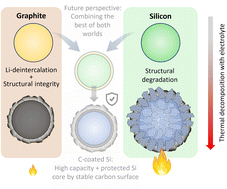
For high-energy lithium ion batteries, silicon is a promising alternative to the state-of-the-art negative electrode active material graphite. Besides the improvement of the electrochemical performance of Si-based electrodes, the thermal stability of these electrodes is crucial for safe battery operation. Therefore, the thermal stabilities of graphitic and Si-based electrodes are compared in this study. Initially, analyses focus on electrodes in combination with electrolyte using differential scanning calorimetry to gain information on onset temperatures and heat release, as well as heat-ramp experiments in an accelerating rate calorimeter (ARC), including pressure and gas analysis. Finally, the thermal behavior is examined at the cell level with both negative active materials in an ARC. It is shown that Si-based negative electrodes cause distinctly stronger exothermic reactions compared to graphite-based electrodes with the same capacity. This increased reactivity and the generation of high amounts of hydrogen accelerate thermal runaway in Si-based cells. Furthermore, this study indicates that the addition of pressure and gas analysis to thermal investigations enables crucial additional conclusions to be drawn on the thermal behavior of negative electrodes. In summary, this study reveals a reduced thermal stability of Si-based electrodes compared to graphite-based electrodes and underlines the relevance of pressure and gas analysis for thermal stability investigations.
 Please wait while we load your content...


