


 PLATFORM UPDATE:


Gassing behavior and safety issues of Li-rich cathodes
 *abc
*abc
Abstract
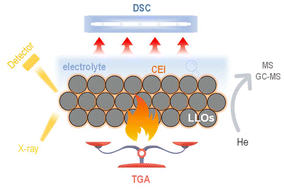
Over the past few decades, lithium-rich layered oxides (LLOs) have attracted significant research attention on account of their prominent advantage of high energy density. However, gas evolution is a crucial issue, exerting a detrimental impact on the cycle performance and intrinsic safety of a battery. This perspective systematically shows that gas evolution is largely attributable to the release of high-reactivity oxygen species under high-voltage or high-temperature conditions. We suggest that future research into the gas-related thermal runaway (TR) safety issue should focus on two scientific aspects. (i) The thermal stability of a delithiated LLO cathode: what is the intrinsic correlation between the microstructural characteristics and thermal stability of delithiated LLOs, and what are the key governing factors that dictate their thermal stability? (ii) The thermal stability of the cathode–electrolyte interface: what are the detailed transformation pathways of reactive oxygen species and the specific interfacial reaction mechanisms occurring at the cathode–electrolyte interface (for delithiated LLOs) under the heating process? On this basis, the development of a multimodal combined characterization platform is innovatively proposed, including in situ XRD, an in situ gas analyzer, DSC, TGA, and other complementary technologies. Based on collected comprehensive information (e.g., phase transitions, gassing behavior, heat generation, and weight loss), the intrinsic structure–activity relationships between microstructural characteristics, gassing behavior, and TR risks are expected to be unveiled. Assisted by artificial intelligence (AI), the R&D cycle for low-gas-emission, high-safety LLO materials and matched electrolytes could be substantially shortened.
 Please wait while we load your content...


