


 PLATFORM UPDATE:


Oxidative potential of fine particle emissions of a residential wood-fired boiler
 *ab
*ab
Abstract
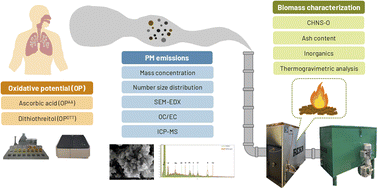
Biomass combustion emits significant amounts of airborne particles, which have been recognized for their environmental and health risks for decades. Oxidative potential (OP) is one of the health-relevant metrics introduced frequently to assess airborne particles in recent years. This study investigates the OP offresh particulate matter with an equivalent aerodynamic diameter of less than or equal to 1 µm (PM1) emitted from a residential biomass boiler (15 kW). Four biomasses, including hardwood chips, softwood chips, hardwood pellets, and softwood pellets, were studied. The sampled PM1 was characterized for its physicochemical properties and analyzed with two OP assays, including ascorbic acid (AA) and dithiothreitol (DTT). The average intrinsic OPAAm ranged from 0.005 to 0.018 nmol min−1 µg−1, and volume-normalized OPAAv was 304.0 to 583.5 nmol min−1 m−3. For DTT assay, the range was 0.0002 to 0.004 nmol min−1 µg−1 for OPDTTm, and 20.9 to 68.7 nmol min−1 m−3 for OPDTTv. More importantly, biomass types with high combustion-emitted PM emissions did not necessarily exhibit high OP, highlighting particle chemical composition as a key determinant of OP. Significant correlations were observed between the organic carbon (OC) fraction and intrinsic OP, underscoring the role of particulate organic components in driving OP from biomass combustion emissions. These findings emphasize the importance of multi-assay OP approaches and provide critical insight into the contribution of combustion emissions from different biomass fuels to ambient air.
- This article is part of the themed collection: The influence of combustion emissions on air quality and atmospheric processes
 Please wait while we load your content...


