


 PLATFORM UPDATE:

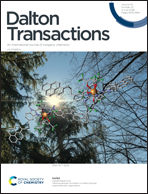
Organoruthenium(II) complexes appended with racemic pyrazoline ligands: An integrated experimental and theoretical insights revealing their apoptotic efficacy
Abstract
Herein, we report four new cationic ruthenium(II) p-cymene racemic complexes (C1-C4) containing N, S coordinated pyrazoline ligands. The contemplated organoruthenium compounds from the dimeric Ru(II) (η6 p-cymene) chlorido moieties and pyrazoline-based ligands were synthesized and characterized by standard methods and single-crystal X-ray diffraction. The pseudo-octahedral geometry, neutral bidentate chelation through N and S atoms, and the cationic nature of all four complexes were confirmed through single-crystal X-ray diffraction studies. The geometry of individual enantiomers of the respective enantiomeric pairs was optimized using density functional theory. Further, frequency calculations, single-point calculations and frontier molecular orbital analysis were also done. Biomolecular interactions of the complexes were investigated using UV-visible and fluorescence spectroscopic techniques with calf thymus DNA (CT-DNA) and bovine serum albumin (BSA). The anticancer activity of the racemic complexes C1-C4 against human colorectal adenocarcinoma (HT-29) and human lung cancer (A549) cell lines was established using MTT assay, which revealed the IC50 concentrations ranging from 15.39 to 21.86 µM for HT-29 cells and 17.29 to 24.29 µM A549 cells, which were comparable to the positive control (cisplatin). Further, due to their similar molecular structures and promising in vitro performance, complex C2 was selected for more detailed anticancer assays. DAPI, DCFDA, and JC-I cellular staining assays, along with flow cytometry, were performed on C2-treated A549 cells. The titled complex induced apoptosis through DNA damage, ROS generation, and intrinsic mitochondrial dysfunction. Molecular docking studies on the DFT-optimized R and S conformers of the complexes to validate the binding interactions towards a spectrum of cancer-related protein targets. The complexes demonstrated favorable binding interactions for B-DNA, BSA, cyclooxygenase-2 (COX-2) and B-cell lymphoma-2 (Bcl-2), with the highest binding affinity found with -8.12, -6.6, -6.25 and -7.53 kcal/mol, respectively. Simultaneously, differences in the extent of interactions towards the target proteins shown by enantiomeric pairs were also examined.
 Please wait while we load your content...


