


 PLATFORM UPDATE:

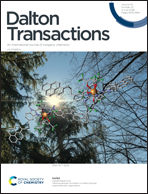
Light-Responsive Spin-Crossover Iron(II) Complexes with Azo-Pyridyl-Benzimidazole Ligands for Molecular Thin Films
Abstract
We report the synthesis, structural characterization, and multifunctional properties of three new iron(II) spin-crossover (SCO) complexes based on the azo-functionalized ligand 2-{4-[trans-phenyldiazenyl]-pyridine-2-yl}-1H-benzimidazole (L): [Fe(L)3](ClO4)2·C3H6O (1), ([Fe(L)3](CF3SO3)2 (2) and [Fe(L)3](BF4)2·C6H14O (3). Single-crystal X-ray diffraction reveals isostructural [Fe(L)3]2+ cations with octahedral {FeN6} coordination environments, adopting a low-spin state at 100 K. Temperature-dependent magnetic measurements and Mössbauer spectroscopy demonstrate gradual thermal SCO behaviour, with transition temperatures tuneable by solvation and counter-anion effects. All three complexes exhibit light-induced excited spin-state trapping (LIESST) at low temperatures, with photo-conversion yields reaching up to 63%. The photoisomerization of the azo unit was investigated in solution and in solid thin films, revealing efficient trans→cis switching in solution and a remarkably stable cis form in the solid state under ambient conditions. Multireference computational studies provide insight into the interplay between ligand photoisomerization and the electronic structure of the Fe(II) centre, indicating distinct mechanistic pathways for low-spin and high-spin states. Furthermore, the successful fabrication of Langmuir–Blodgett monolayer and multilayer films was demonstrated, with AFM and XPS confirming molecular-level film organization and preservation of metal–ligand coordination at the surface. Together, these results establish azo-functionalized pyridyl-benzimidazole ligands as a versatile platform for integrating thermal SCO, light responsiveness, and surface assembly, offering promising prospects for multifunctional molecular switches and surface-integrated photomagnetic devices.
 Please wait while we load your content...


