


 PLATFORM UPDATE:


Nitro-substituted ruthenium(ii) polypyridyl complexes synergise with ATR inhibitors to enhance replication stress in cancer cells

Abstract
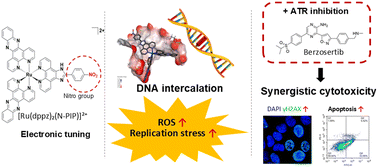
Ruthenium(II) polypyridyl complexes (RPCs) are promising anticancer candidates owing to their ability to intercalate DNA and disrupt DNA replication. Here, we report a series of nitro-substituted ruthenium(II) complexes of the general formula [Ru(dppz)2(NPIP)]2+ (dppz = dipyridophenazine; NPIP = 2-(nitrophenyl)imidazo[4,5-f][1,10]phenanthroline), which contain a nitro substituent at the ortho, meta or para position of the PIP ligand (PIP = 2-(phenyl)imidazo[4,5-f][1,10]phenanthroline). All three isomers retain the characteristic metal-to-ligand charge transfer (MLCT) photophysical properties of the Ru-dppz core and intercalate DNA, where binding affinity is impacted by the position of the nitro group (ortho > para > meta). All three complexes associate with membrane structures in cancer cells, as assessed by light microscopy, with pronounced colocalisation with the plasma membrane shown for the meta- and para- isomers. Despite limited nuclear emission, the complexes induce pronounced reactive oxygen species (ROS) generation alongside ATM pathway activation and γH2AX foci generation, indicating the generation of DNA double-strand breaks (DSBs). This finding contrasts with the cellular response observed for the parent complex [Ru(dppz)2(PIP)]2+, indicating that nitro substitution has facilitated an altered DNA damage response. Among them, the para-substituted nitro derivative (complex 3) induces the strongest DNA damage response (DDR) and was therefore investigated in combination with the ATR inhibitors (ATRi) berzosertib and ceralasertib. Strong synergism is observed across multiple cancer cell lines, with combination treatment suppressing clonogenic survival and enhancing DNA damage signalling and apoptotic cell death. Mechanistic analyses reveal that DNA intercalation and ROS generation cooperatively elevate replication stress, thereby sensitising cells to ATR inhibition. Comparable ATRi synergism was also observed for the parent complex Ru-PIP, indicating that DSB pathway activation is not a requirement for the observed synergy. This study demonstrates that nitro substitution offers a means to fine-tune DNA-binding behaviour and the resulting cellular DNA damage response to RPCs, and supports the potential of employing Ru(II) metallointercalators in combination with ATR inhibitors as an anti-cancer strategy.
 Please wait while we load your content...


