


 PLATFORM UPDATE:

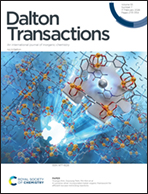
Two-dimensional metal–organic framework/graphene oxide composites as proton conductors: chemical grafting vs. physical blending

Abstract
A water-stable two-dimensional (2D) zirconium-based metal–organic framework (MOF), ZrBTB (BTB = 1,3,5-tri(4-carboxyphenyl)benzene), serves as a porous platform to integrate with graphene oxide (GO) in order to achieve ultrahigh proton conductivity (σ). Two synthetic methods, chemical grafting and physical blending, are used for preparing various nanocomposites composed of ZrBTB and GO. The porosity, morphology and proton-conducting characteristics of these composites and both pristine materials are investigated. The nanocomposite obtained by the grafting method with a GO loading of around 1 wt%, ZrBTB–0.01GO, possesses coordination bonds between GO and the hexa-zirconium nodes of ZrBTB; such chemical grafting reduces the number of accessible –OH/–OH2 pairs on the MOF nodes. ZrBTB–0.01GO thus exhibits a worse proton-conducting performance, with a σ of 3.93 × 10⁻³ S cm−1 at 60 °C and 99% relative humidity (RH), compared to those of the pristine ZrBTB (1.57 × 10⁻² S cm−1) and pristine GO (8.68 × 10⁻³ S cm−1), respectively. In contrast, considerably increased proton conductivities and decreased activation energies are achieved with the same GO loading by the physical blending method, with ZrBTB/0.01GO exhibiting a σ of 4.01 × 10⁻² S cm−1 at 60 °C and 99% RH and an activation energy of 0.28 eV. At an optimal GO loading, the resulting 2D nanocomposite, ZrBTB/0.005GO, can achieve an ultrahigh σ of 1.03 × 10⁻¹ S cm−1 at 60 °C under 99% RH with a low activation energy of 0.18 eV. The findings here suggest that compared to the commonly reported chemical grafting method, the physical blending method is more advantageous for preparing proton-conductive 2D MOF-based nanocomposites with more accessible proton-relaying functional groups and thus better performance.

- This article is part of the themed collection: Inorganic Nanomaterials
 Please wait while we load your content...


