


 PLATFORM UPDATE:


A copper phosphide electrocatalyst enables high-areal-capacity and long-term stability in lithium–sulfur pouch cells

Abstract
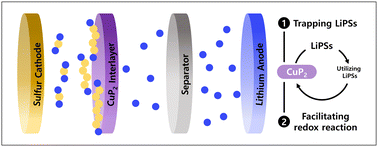
Despite their high theoretical energy density, the commercial viability of lithium–sulfur batteries (LSBs) is impeded by issues of poor sustainability, primarily stemming from the shuttle effect of lithium polysulfides. To address this challenge, we have developed a novel copper phosphide (CuP2) electrocatalyst. Through ball-milling, CuP2 is synthesized with copper- and oxide-based catalytic surface active sites that demonstrate strong adsorption of lithium polysulfides. This enhanced adsorption effectively suppresses the shuttle effect, leading to significant improvements in battery lifespan and initial capacity. By optimizing the CuP2 content in the interlayer to 10 wt%, enhanced cell reversibility is achieved. A coin cell fabricated with the optimized interlayer delivers an initial capacity of 964 mAh g−1 and maintains a robust capacity of 600 mAh g−1 after 500 cycles at a 0.5 C rate. Critically, the practical applicability of this approach is confirmed in a pouch cell, where the areal capacity is doubled to 2.2 mAh cm−2 with the inclusion of the CuP2 catalyst. This work, therefore, presents a new avenue for the rational design of highly efficient electrocatalysts for next-generation LSBs.
 Please wait while we load your content...


