


 PLATFORM UPDATE:


Rational structural engineering strategies for electrochemical CO2 reduction on copper
 *a
and
Lingxing
Zeng
*a
*a
and
Lingxing
Zeng
*a
Abstract
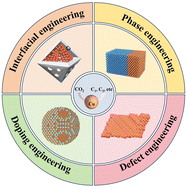
The electrochemical reduction of carbon dioxide (CO2RR) offers a promising pathway for converting CO2 into value-added chemicals and fuels, thereby mitigating greenhouse gas emissions and enabling carbon resource utilization. Copper-based catalysts have attracted considerable attention due to their unique capability to produce a wide range of C1 and C2 products. Nevertheless, challenges such as low selectivity, poor stability, and inefficient reaction kinetics impede their practical application. This review comprehensively summarizes recent advances in the structural engineering of Cu-based electrocatalysts for enhanced CO2RR performance. Key strategies—including interface engineering, phase engineering, doping engineering, and defect engineering—are discussed in detail, emphasizing their roles in modulating electronic structures, surface morphologies, and reaction pathways. In particular, we provide insights into the reaction mechanisms and intermediate stabilization facilitated by these structural modifications. Finally, current challenges and future directions for the rational design of high-performance Cu-based catalysts toward sustainable CO2 conversion are outlined.
- This article is part of the themed collection: 2026 Frontier and Perspective articles
 Please wait while we load your content...


