


 PLATFORM UPDATE:


Adsorption properties of α-type layered and pillared zirconium phosphite phosphonates with high specific surface areas and porosities

Abstract
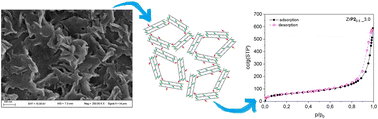
Single-phase mixed zirconium phosphite phosphonates with layered and pillared structures were prepared by direct reaction of a zirconyl salt and phosphorous acid with phenylphosphonic or p-xylenediphosphonic acid, respectively. Materials with different chemical compositions were prepared by changing the phosphorous acid/phosphonic acid molar ratio in the mother solution between 1 and 4. The compounds were characterised by XRPD, 31P MAS NMR, SEM, and FTIR analyses. The adsorption/desorption properties toward nitrogen and hydrogen at 77 K and the dichloromethane (DCM) uptake from the vapor phase at 30 °C were studied. All materials exhibited a Specific Surface Area (SSA) of ≥ 200 m2 g−1, due to the contribution of micro-, meso- and macropores. The estimated micropore volume, Vmicro, increased with increasing SSA and affected the hydrogen uptake that reached 1.43 mmol g−1 at 77 K with the zirconium phosphite phenylphosphonate compound having the highest Vmicro value. The DCM uptake reached 1300 mg g−1 with the zirconium phosphite p-xylenediphosphonate having the highest macroporosity. The zirconium phosphite phenylphosphonate in the gel form was proved to disperse well in a PLA matrix, even at high filler loadings, affecting its physico-chemical properties.
 Please wait while we load your content...


