


 PLATFORM UPDATE:


Palladium(0) and Juglone: a new alliance in the fight against ovarian cancer
 a
Nicola
Demitri,
b
Thomas
Scattolin,
*c
Flavio
Rizzolio
*ad
and
Fabiano
Visentin
*a
a
Nicola
Demitri,
b
Thomas
Scattolin,
*c
Flavio
Rizzolio
*ad
and
Fabiano
Visentin
*a
Abstract
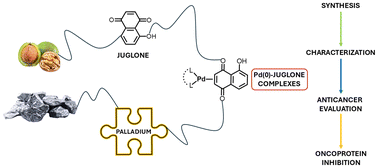
Multitarget drugs represent one of the most appropriate responses to a multifaceted and elusive disease such as cancer. Besides, the option of introducing more active substances in a single compound may prove beneficial to simplify the administration of the drug and improve its pharmacokinetics. Here, the synthesis of a new class of palladium(0) complexes coordinating one molecule of Juglone has been developed, optimizing a versatile method that allows to easily select the kind of ancillary ligands, including phosphines, arsines, isocyanides, and N-heterocyclic carbenes. All the newly synthesised metal compounds have been fully characterized by spectroscopic methods and, in some cases, by X-ray diffractometry. Juglone is a natural-source organic compound derived from many species of the Juglandaceae family, whose therapeutic properties have long been known. In particular, its inhibitory activity toward PIN1—a fast-acting enzyme upregulated in cells and tissues of various neoplasms, especially ovarian cancer—can be exploited to reduce tumor proliferation. On the other hand, some of our previous works have shown the antiproliferative activity of different palladium(0) derivatives, in particular towards ovarian cancer cells. In this work, we prove that the η2-coordination of Juglone on the palladium(0) center can, in some cases, amplify its in vitro anticancer activity towards different ovarian cancer cell lines, probably by leveraging the combined effect of the natural organic molecule and the metal residue. A further added value is represented by the reduced cytotoxicity exhibited by most of our palladium complexes against MRC-5 non-cancerous cells (IC50 > 100 μM). At the same time, our synthesized complexes maintain high effectiveness against cisplatin-resistant and high-grade serous ovarian cancer cell lines, with IC50 values in the micromolar range. Finally, western blot analysis carried out on one of the most active complexes has proven its high inhibitory effect on the PIN1 oncogenic protein.
 Please wait while we load your content...


