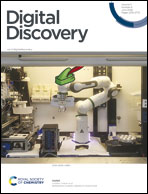
Artificial intelligence-driven optimization of closed-loop CO2 capture and conversion

Abstract

Reactive carbon capture couples CO2 capture with electrochemical CO2 upgrading. A major advantage of reactive carbon capture is that CO2 can be released from a liquid sorbent without the need for heat or vacuum. However, it is challenging to find conditions capable of both capturing and upgrading CO2 effectively. The capture of CO2 requires the sorbent to be at a high pH, while CO2 electrolysis is more effective at a lower pH. In this study, we used an artificial intelligence (AI)-driven strategy to optimize several operating variables for reactive carbon capture. The optimization yielded increases in CO2 capture efficiency from 30% to 83% and faradaic efficiency for CO (FECO) from 30% to 42%. These new benchmarks lead to a CO breakeven price of <$1 per kilogram for reactive carbon capture, a value that represents one of the lowest cost pathways for converting air into fuel.

Graphical abstract: Artificial intelligence-driven optimization of closed-loop CO2 capture and conversion

Supplementary files

Article information

Article type
Paper
Submitted
24 Dec 2025
Accepted
31 May 2026
First published
29 Jun 2026
This article is Open Access
Creative Commons BY-NC license

Digital Discovery, 2026, Advance Article

Artificial intelligence-driven optimization of closed-loop CO2 capture and conversion

Y. Kim, B. M. W. de Hepcée, M. Mokhtari, M. Namdari, G. V. Crescenzo and C. P. Berlinguette, Digital Discovery, 2026, Advance Article , DOI: 10.1039/D5DD00585J

This article is licensed under a Creative Commons Attribution-NonCommercial 3.0 Unported Licence. You can use material from this article in other publications, without requesting further permission from the RSC, provided that the correct acknowledgement is given and it is not used for commercial purposes.

To request permission to reproduce material from this article in a commercial publication, please go to the Copyright Clearance Center request page.

If you are an author contributing to an RSC publication, you do not need to request permission provided correct acknowledgement is given.

If you are the author of this article, you do not need to request permission to reproduce figures and diagrams provided correct acknowledgement is given. If you want to reproduce the whole article in a third-party commercial publication (excluding your thesis/dissertation for which permission is not required) please go to the Copyright Clearance Center request page.

Read more about how to correctly acknowledge RSC content.

Social activity

Spotlight

Advertisements