


 PLATFORM UPDATE:


Recent progress for microwave catalytic pyrolysis of plastic waste to valuable chemicals
 *ab
*ab
Abstract
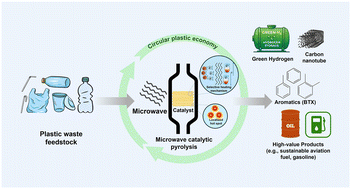
Plastic waste is accumulating in our environment, causing severe threats to the ecosystem and human health. Conventional recycling methods often suffer from low efficiency and limited product value, hindering their extensive application. By comparison, microwave catalytic pyrolysis of plastic waste is a promising route due to its rapid and uniform heating, high energy efficiency, and superior product selectivity. Here we review recent progress in applying microwave catalytic pyrolysis for plastic waste upcycling from the perspective of type, function, and synthesis strategies of catalysts. This review introduces the fundamental principles of microwave heating in the catalytic pyrolysis process, and the conversion pathway of plastic waste over different catalysts, emphasizing the relationship between catalyst properties and product selectivity. The high economic viability of this technology provides huge potential for its industrial application. Finally, challenges, including catalyst stability, mechanism study, and the gap between lab and real-world scenarios, are also critically discussed. Overall, microwave catalysis shows significant potential for plastic waste upcycling.
- This article is part of the themed collections: Catalysis Science & Technology Emerging Investigators, Catalysis Science & Technology Open Access Spotlight 2026 and Emerging Investigator Series
 Please wait while we load your content...


