


 PLATFORM UPDATE:

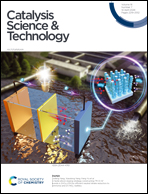
Nanocapsule engineering endows aldolase with robust organic-solvent tolerance and enhanced catalytic efficiency
 ab
and
Yunzi
Luo
*abc
ab
and
Yunzi
Luo
*abc
Abstract
The construction of valuable fluorinated molecules relies critically on the extension of fluorine-containing modules, fostering innovations across medicinal, material, and agricultural fields. Aldolase serves as an efficient biocatalyst for stereoselective carbon–carbon bond formation between an aldehyde and a defined electrophilic partner, enabling controlled carbon-chain elongation. However, the efficiency of this aldol addition is often limited by the poor aqueous solubility of the aldehyde substrate. The presence of additional organic solvents can raise the dissolved substrate concentration and accelerate mass transfer, thereby enhancing overall conversion, but may lead to the loss of enzyme activity. To address this issue, we wrapped aldolase in a thin polymer shell by a two-step in situ encapsulation process. The nanocapsules shield the protein from DMSO or acetonitrile while letting substrates and products to pass freely. This modification strategy significantly improved the catalytic efficiency towards nine fluorobenzaldehyde derivatives, with an increase ranging from 1.45- to 21.25-fold. These findings provided a promising strategy for advancing biocatalysis in organic solvent-rich environments.

 Please wait while we load your content...


