


 PLATFORM UPDATE:

Stabilizing Pd/In2O3 on zeolite silicalite-1: a route to durable and selective CO2 hydrogenation to methanol
 *a
*a
Abstract
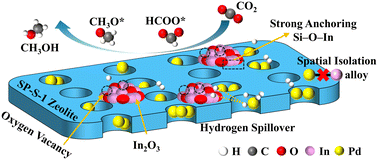
Despite their high methanol selectivity in CO2 hydrogenation, In2O3-based catalysts still face limitations in CO2 conversion and long-term stability. This work addresses these challenges by designing a highly dispersed Pd/In2O3 catalyst supported on self-pillared silicalite-1 (SP-S-1) zeolite. The well-defined channels and abundant surface silanol groups of SP-S-1 effectively anchor and disperse In2O3 nanoparticles. This structure also spatially isolates Pd species, which prevents their sintering and inhibits the formation of inactive Pd–In alloys. Comprehensive characterization reveals that the strong metal–support interaction stabilizes oxygen vacancies and prevents over-reduction of In3+ species, which are crucial for CO2 activation and methanol selectivity. The optimized Pd/In2O3/SP-S-1 catalyst achieves a methanol space–time yield of 2.57 gMeOH gIn+Pd−1 h−1 at 300 °C, approximately five times higher than that of the unsupported counterpart. More importantly, it demonstrates high stability, retaining 95% of its initial activity after 100 hours on stream, far outperforming the unsupported catalyst. This work highlights zeolite confinement as a versatile strategy for designing robust and efficient CO2-to-methanol catalysts.
 Please wait while we load your content...


