


 PLATFORM UPDATE:

Defective WO3-mediated photocatalytic oxidation of aromatic alcohols: achieving product versatility with bromine radicals and water

Abstract
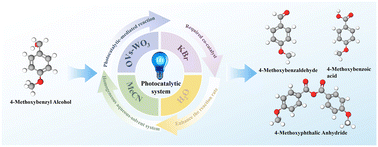
This study presents a novel photocatalytic system for the selective visible-light-driven oxidation of benzyl alcohols through the modulation of WO3 structure and reaction conditions. Under ambient air conditions at room temperature, defective WO3, in synergy with KBr in acetonitrile solvent, achieved stepwise oxidation of aromatic alcohols to aldehydes, carboxylic acids, and acid anhydrides. The study revealed that KBr plays a pivotal role by generating bromine radicals, which activate C–H bonds to drive the oxidation reaction. Moreover, the presence of H2O not only enhanced the conversion efficiency of 4-methoxybenzyl alcohol but also modulated reaction pathways through facilitating bromide ion dissociation, driving the deep oxidation of aldehydes. Furthermore, the system demonstrated excellent substrate compatibility, exhibiting superior catalytic activity in both primary and secondary benzyl alcohol oxidations. In summary, this catalytic system significantly enhances the efficiency of photocatalytic alcohol oxidation while overcoming the conventional limitation of terminating oxidation at aldehyde/acid stages, offering an environmentally benign and highly effective alternative to traditional alcohol oxidation processes.
 Please wait while we load your content...


