


 PLATFORM UPDATE:


Strain engineering of piezo-photocatalysis for water splitting

Abstract
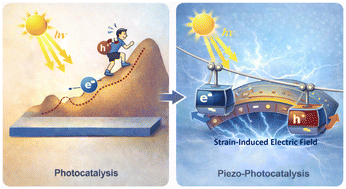
Photocatalytic water splitting is limited by rapid charge-carrier recombination and sluggish interfacial kinetics. Establishing a stable internal driving force to promote charge separation and reaction activation remains a critical challenge. Piezoelectric semiconductors, which intrinsically couple semiconducting and piezoelectric properties, offer distinct advantages due to their ability to generate built-in electric fields under mechanical stimuli, thereby enabling high-efficiency piezo-photocatalytic hydrogen production. Recent studies have demonstrated that strain engineering effectively tailors crystal structures and band configurations, modulates carrier generation and transport, and accelerates both hydrogen and oxygen evolution kinetics. This review highlights the regulatory role of strain engineering in piezo-photocatalytic water-splitting systems and elucidates the fundamental mechanisms of strain-coupled piezo-photocatalysis. Advances in modulating piezopotential and charge dynamics via external stress, interfacial strain, and heterostructure design are summarized. Key challenges—including limited precision and stability in strain control, structural fatigue, and stress-induced side reactions—are also addressed. Overall, strain engineering provides a tunable strategy for optimizing piezo-photocatalytic performance and holds significant promise for advancing high-efficiency and sustainable hydrogen-production technologies.
 Please wait while we load your content...


