


 PLATFORM UPDATE:


Aldol condensation of acetaldehyde over Zr-β zeolites with tailored Lewis acidity and passivated Brønsted sites: toward environmentally benign crotonaldehyde synthesis

Abstract
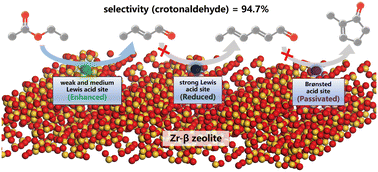
In response to the challenges of equipment corrosion and environmental pollution associated with the homogeneous catalytic production of crotonaldehyde via acetaldehyde aldol condensation, this work focused on the synthesis of Zr-β zeolites with Lewis acidity. The crotonaldehyde selectivity was significantly improved by tailoring the acidic properties of the zeolites. A comparative study of three distinct Lewis acid sites identified isolated framework tetra-coordinated Zr sites as the most efficient catalytic centers, which were successfully constructed using hydrothermal synthesis and liquid-phase incorporation methods. Zr-β zeolites synthesized via liquid-phase incorporation demonstrated higher conversion and selectivity owing to larger pore size, greater total Lewis acidity and a higher proportion of weak and medium Lewis acid sites. These properties were further optimized by adjusting the precursor and solvent during the synthesis process. In situ DRIFTS analysis revealed that the Lewis acid sites activated the α-H of acetaldehyde, forming carbanion intermediates essential for the enolization and subsequent aldol condensation. The main by-product, methyl cyclopentenone, was found to originate from the Prins reaction of sorbaldehyde formed through excessive aldol condensation, which was mediated by Brønsted acid sites. To suppress this side reaction, the zeolites were modified with alkali cations (Na+, K+) to selectively passivate the Brønsted acid sites while enhancing the Lewis acidity significantly. This strategy effectively reduced by-product formation and ultimately achieved a crotonaldehyde selectivity of 94.7%.
 Please wait while we load your content...


