


 PLATFORM UPDATE:


High-performance photocatalytic PSF/ZnO–GO membranes for the removal of pharmaceuticals and proteins from wastewater
 *b
*b
Abstract
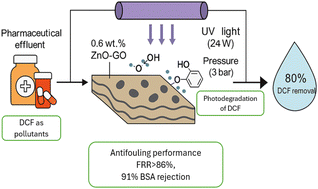
Effluents from the pharmaceutical industry pose significant environmental threats due to their complex and recalcitrant nature, including low biodegradability, high organic load, and the presence of emerging contaminants such as pharmaceutical residues. In this study, polysulfone (PSF) ultrafiltration membranes were modified with zinc oxide–graphene oxide (ZnO–GO) nanocomposites at varying loadings (0.6 and 1.2 wt%) via the phase inversion method to enhance their separation efficiency and photocatalytic performance. Physicochemical characterization was performed using scanning electron microscopy (SEM), energy-dispersive X-ray spectroscopy (EDXS), Fourier transform infrared spectroscopy (FTIR), contact angle analysis, and mechanical strength tests. The photocatalytic performance of the membranes was evaluated through the degradation of diclofenac (DCF), a model pharmaceutical contaminant, under UV irradiation (24 W) at an operating pressure of 3 bar. The membrane incorporating 0.6 wt% ZnO–GO exhibited the best overall performance, achieving a high-water flux of 19.12 L m−2 h−1 bar−1 and an 80% DCF removal efficiency. Furthermore, antifouling evaluation using bovine serum albumin (BSA) demonstrated a rejection rate of 91% and a flux recovery ratio (FRR) exceeding 86%, indicating strong resistance to fouling. These results demonstrate the potential of PSF/ZnO–GO nanocomposite membranes as high-performance, multifunctional systems for the advanced treatment of pharmaceutical wastewater, combining efficient filtration with photocatalytic degradation capabilities.
- This article is part of the themed collections: Catalysis Science & Technology Recent HOT Articles and Catalysis Science & Technology Open Access Spotlight 2025
 Please wait while we load your content...


