


 PLATFORM UPDATE:


Oxidation–acidity synergism in Pt–HSiW/CeO2 catalysts: effects of Pt loading on chlorobenzene degradation pathways and by-product inhibition

Abstract
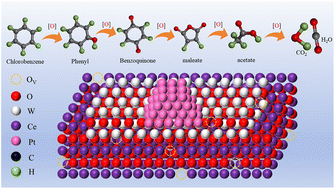
The synergistic interaction between redox properties and acidity was crucial for achieving efficient catalytic oxidation of chlorinated volatile organic compounds (CVOCs). This study systematically investigated the influence of Pt content on the redox–acidity synergy by hydrothermally synthesizing a series of Pt–HSiW/CeO2 catalysts with gradient Pt loadings (0.5–3.0 wt%). Comprehensive characterization revealed that Pt loading significantly modulated oxygen vacancy concentration, surface oxygen activity, and acid site distribution. The Cat-2.0 catalyst (2.0 wt% Pt) exhibited the highest Ce3+ fraction (29.8%), abundant surface adsorbed oxygen (71.7%), and the lowest oxygen desorption temperature, thereby demonstrating optimal catalytic performance for chlorobenzene. Although the total acidity of the catalyst decreased with increasing Pt loading, Cat-2.0 retained sufficient weak and medium-strong acidic sites, promoting C–Cl bond cleavage while inhibiting electrophilic chlorination. In situ DRIFTS and GC-MS analyses further confirmed that synergistic interactions between oxidative and acidic sites accelerated the conversion of chlorobenzene to phenol and benzoquinone, ultimately yielding CO2 and H2O.
 Please wait while we load your content...


