


 PLATFORM UPDATE:


Nemo censetur ignorare legem: what research chemists should know about the EU legal framework

Abstract
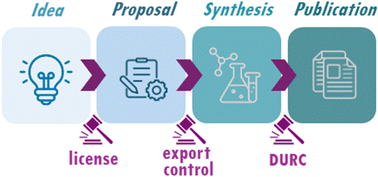
Organic chemistry operates within its own intricate set of rules, governed by the strict principles of matter and physics, while law structures societal order through evolving legal frameworks. Both fields, though inherently distinct, converge. Organic chemistry seeks to solve societal challenges that law must regulate and adapt to fit in a constantly shifting landscape punctuated with geopolitical tensions, economic interests, public health and evolving needs. The subtle balance between academic freedom, fundamental human rights, and bene- or malevolent intentions, drives the interface of synthetic organic chemistry and law. Seemingly innocent and routine actions for synthetic organic chemists, such as ordering reagents, exporting final products, building international collaborations, and disseminating results, are increasingly regulated by (inter)national laws. This Tutorial Review serves as a vade mecum, providing an in-depth overview of international and European laws affecting organic chemistry in research laboratories. It focuses on areas of significant societal impact and direct concern for research chemists: narcotic/psychotropic substances, chemical warfare-related compounds and dual-use items. It is set to ensure better cooperation between the two main actors: public officers and chemists.
 Please wait while we load your content...


