


 PLATFORM UPDATE:


Molecular innovations in nanofiltration via interfacial polymerization: from monomer design to membrane performance

Abstract
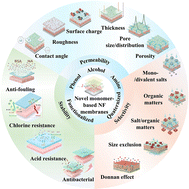
Membrane technology plays a crucial role in solving global water scarcity, where high-performance semipermeable membranes, such as nanofiltration (NF) membranes, are essential elements for efficient water treatment. The performance of NF membranes is largely determined by both the molecular structures of the monomers and the mechanisms of interfacial polymerization, which ultimately influence their permeability, selectivity, and stability. In recent years, significant progress has been made in the development of NF membranes using novel monomers. This review aims to provide a comprehensive overview on the synthesis methods for these novel monomers and NF membranes, with a particular emphasis on the modern interfacial polymerization techniques to fabricate NF membranes. We will also examine the detailed surface chemistry and structural characteristics of these novel membranes, elucidating the underlying mechanisms and sciences governing their separation performance. Finally, we will discuss the current challenges associated with the novel monomer-based NF membranes and offer potential solutions to develop next-generation NF membranes. By addressing these key aspects, this critical review may provide valuable insights to molecularly design novel NF membranes and to explore their applications in the field of wastewater treatment and resource recovery.
 Please wait while we load your content...


