


 PLATFORM UPDATE:


Deciphering the interaction patterns of intermediates on single atom catalysts during electrocatalytic CO2 conversion reactions

Abstract
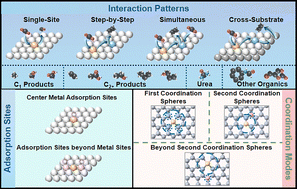
Electrocatalytic CO2 conversion (CO2CR) offers a promising route for addressing carbon emissions while simultaneously generating valuable chemical feedstocks. Single-atom catalysts (SACs) have attracted significant attention due to their maximized metal atom utilization and precisely defined coordination architectures. Accumulating evidence indicates that CO2CR over SACs is jointly governed by the intrinsic properties of the central metal atom and the surrounding coordination environment. In this review, we present a comprehensive analysis of the hierarchical coordination environments surrounding the central metal center, encompassing monoelement and bielement coordination in the first coordination sphere, second coordination sphere modulation by neighboring non-metallic and metallic species, and engineering of the beyond-second coordination sphere via functional-group grafting and distal substrate functionalization. We further elucidate the nature of catalytically active sites and systematically categorize intermediate binding behaviors into single-site, step-by-step, simultaneous and cross-substrate intermediate binding modes, highlighting how tailored intermediate interactions regulate reaction kinetics, suppress competing pathways, and steer product selectivity. Notably, we summarize recent advances demonstrating that SACs are not inherently confined to C1 products but also unlock complex coupling reactions through rationally designed multi-site interaction networks, yielding critical chemicals including C2+ products, urea, and others. This framework establishes SACs as a transformative platform for next-generation CO2CR through precise control of multiscale coordination environments, active sites, and intermediate interactions.
 Please wait while we load your content...


