


 PLATFORM UPDATE:


Hollow micro-/nanostructures for enhanced pathogen theranostics

Abstract
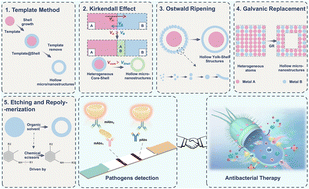
The escalating crisis of antimicrobial resistance presents an unprecedented challenge to global health, demanding a fundamental redefinition of our approach to pathogenic infections. Hollow micro-/nanostructures are emerging as a disruptive platform poised to meet this daunting new reality, offering innovative strategies for next-generation bacterial biosensing and antibacterial therapy. Herein, we proceed with a comprehensive review systematically examining recent advances in hollow micro-/nanostructures, encompassing their synthetic methodologies, structural engineering, and functional mechanisms for pathogen theranostics. In bacterial biosensing, the analytical performance can be significantly improved by hollow micro-/nanostructures through diverse modes, such as colorimetric, fluorescence, surface-enhanced Raman scattering, electrochemical, and photothermal modes, paving the way for rapid and accurate pathogen diagnostics. The unique physicochemical properties of hollow micro-/nanostructures, such as enzyme-mimetic catalysis, photothermal, photocatalytic activity, controlled drug release, piezocatalytic effects, enable versatile and efficient antibacterial therapies. Furthermore, we critically analyze persistent challenges in scalability, biocompatibility, and clinical translation while proposing forward-looking strategies to design hollow micro-/nanostructures, deepen mechanistic understanding, and foster interdisciplinary collaborations. This work underscores the pivotal role of hollow micro-/nanostructures in redefining pathogen management paradigms, offering a robust framework to safeguard global public health in the post-antibiotic era.
 Please wait while we load your content...


