


 PLATFORM UPDATE:

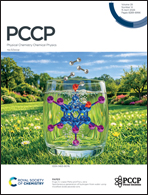
Study on translational diffusion of solute molecules in novel phosphonium-based dicationic ionic liquids by transient grating spectroscopy

Abstract
Translational diffusion coefficients of carbon monoxide (CO), diphenylacetylene (DPA), and diphenylcyclopropenone (DPCP) were determined by transient grating (TG) spectroscopy in five ionic liquids (ILs), including novel phosphonium-based dicationic ionic liquids (DILs): 1,6-bis(trioctylphosphonium)hexane bis(trifluoromethanesulfonyl)amide ([(P888)2C6][NTf2]2) and 1,10-bis(trioctylphosphonium)decane bis(trifluoromethanesulfonyl)amide ([(P888)2C10][NTf2]2). We tried to clarify the different effect of the alkyl-chain length comparing the diffusion coefficients in monocatinoic ILs and DILs with similar total number of alkyl carbons per charge of cation. Comparing two DILs, the viscosity of [(P888)2C10][NTf2]2 was smaller than that of [(P888)2C6][NTf2]2. Further, the X-ray scattering peak arising from the structural heterogeneity shifted to a larger q-value for the DIL of the longer linkage, indicating that the nonpolar domain became smaller for the DIL with the longer alkyl linkage. The diffusion coefficients of CO, DPA and DPCP in ILs were larger than those predicted by the Stokes–Einstein (SE) equation. In particular, the diffusion coefficient of CO in the phosphonium-based DILs deviated significantly from the SE prediction. Moreover, the degree of deviation was almost independent of the alkyl linkage chain length. By comparing the diffusion coefficients of CO in monocationic ILs and DILs, it was found that the diffusion coefficient of CO was correlated with the volume per charge of the cation.

 Please wait while we load your content...


