


Triazole-stapled p53 mimetics as MDM2 inhibitors: structural and thermodynamic origin of enhanced binding affinity

Abstract
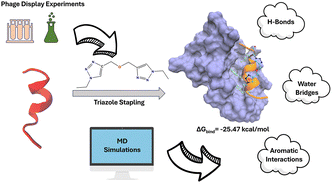
The p53–MDM2 protein–peptide complex is central to oncogenic-targeted therapeutics. p53 functions as a regulatory protein involved in DNA repair and cell cycle control, while MDM2 acts as its negative regulator. In oncogenic conditions, disrupting the p53–MDM2 interaction presents a significant therapeutic challenge. Stapled peptides, particularly triazole-based peptides, exhibit enhanced stability and binding affinity, making them promising inhibitors and potential alternatives to conventional therapeutics. However, their detailed binding mechanism and thermodynamic aspects remain underexplored. In this study, we built and refined peptide models, after which extensive simulations were performed to investigate the binding of triazole-based stapled p53 peptides to MDM2. Among the variants studied, the p534–11 peptide exhibited the most favorable binding free energy, primarily due to an extended number of non-covalent interactions, and it is in good agreement with the experiment. We also examined the role of water molecules in the binding process. Our results reveal that water plays a crucial role in mediating bridging interactions between p53 and MDM2, and these interactions were particularly substantial in the p534–11 complex. These findings provide valuable insights for the rational design of future triazole-stapled peptides and can guide future experimental efforts in targeting the p53–MDM2 interaction.
 Please wait while we load your content...


