


 PLATFORM UPDATE:


Predicting polyacrylate–microplastic interactions with atomistic simulation

Abstract
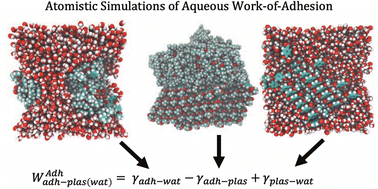
Adhesive-coated substrates have been used to non-selectively capture microplastics (MPs) in water. This work explores whether selective MP capture is plausible by modifying the adhesive structure. To find the degree of selectivity, adhesive strength might be estimated by examining surface interactions between specific adhesives and MPs. Herein, we describe the use of atomistic simulations to predict the aqueous adhesive strength via the aqueous work-of-adhesion (WoA(aq)), a thermodynamic measure of adhesion. Simulation of four common MPs and five different polyacrylate adhesives were conducted. The simulations show that fluorinated sidechains, due to their low interfacial energies and higher surface energies, exhibit increased selectivity toward polystyrene over other plastics. To provide experimental support for these predictions, probe-tack studies of aqueous adhesion were performed and found to agree with the simulations. Simulations also revealed non-intuitive interactions that govern WoA(aq), arising from the complex intra- and intermolecular interactions that occur when polyacrylates interface with water and MPs. This expanded understanding of the microscopic features of adhesion can be used to design next-generation adhesives and MP remediation technology.
 Please wait while we load your content...


