


 PLATFORM UPDATE:


Room temperature dynamics of atomic clusters adsorbed on graphene: a machine-learning force field molecular dynamics study

Abstract
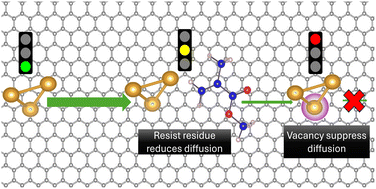
Clusters adsorbed on graphene can alter the electronic and spin-based properties of this two-dimensional material by proximity interactions. However, at room temperature, the adsorbed clusters tend to move freely over the surface. First-principles molecular dynamics simulations are performed to study the motion of size-selected Aun (n = 3 and 6) clusters adsorbed on the graphene surface. While the clusters are found to be diffusive along the surface of pristine graphene, the presence of C-vacancies in graphene drastically suppresses the diffusion of the clusters and “anchors” them to the vacancy site. Besides carbon vacancies, the presence of resist residues like methyl methacrylate, which is commonly used in the fabrication process of nanoscale devices, was also considered in this work. The presence of residues on the surface of graphene strongly reduces the diffusion of the Aun clusters.
 Please wait while we load your content...


