


 PLATFORM UPDATE:


Synergistic modulation of the electronic structure and morphology in porous Mo-NiFe LDH for enhanced electrocatalytic UOR
 *ab
Yanli
Zhou
*ab
*ab
Yanli
Zhou
*ab
Abstract
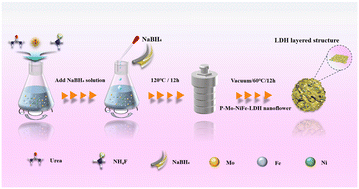
The urea oxidation reaction (UOR), as a key process in renewable energy technologies and wastewater treatment, suffers from sluggish reaction kinetics due to its six-electron transfer characteristics, necessitating the development of highly efficient catalysts. In this work, a one-pot method combined with a sodium borohydride (NaBH4) etching strategy was employed to successfully prepare porous Mo-doped NiFe-layered double hydroxide (P-Mo-NiFe-LDH), achieving a significant enhancement in UOR performance. Studies revealed that Mo doping altered the microscopic morphology of NiFe-LDH and promoted the transition of Ni2+/Fe2+ to higher valence states (Ni3+/Fe3+), thereby improving the reaction kinetics. Meanwhile, the porous structure constructed by NaBH4 etching not only exposed abundant active sites but also optimized the electron transport pathways. This synergistic effect of morphology regulation and electronic structure optimization enabled P-Mo-NiFe-LDH to exhibit outstanding catalytic performance in a 1 M KOH + 0.33 M urea electrolyte: a current density of 10 mA cm−2 was achieved at just 1.39 V (vs. RHE), with a Tafel slope of 38.7 mV dec−1, demonstrating a clear advantage over most reported NiFe-based catalysts. This catalytic potential is 90 mV lower than that of the water oxidation reaction, offering certain energy-saving benefits. The synergistic strategy of porous structures and heteroatom doping in this work provides new insights for designing high-performance LDH-based electrocatalysts.
- This article is part of the themed collection: Nanomaterials
 Please wait while we load your content...


