


 PLATFORM UPDATE:


Reactive molecular dynamics study on localized high-temperature region formation and thermal decomposition of defect-containing β-HMX crystals: influence of different types and concentrations of liquid inclusion defects
 a
Weihua
Zhu
*a
a
Weihua
Zhu
*a
Abstract
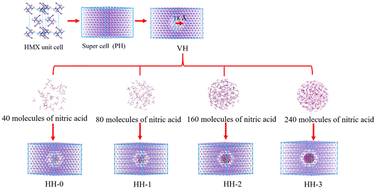
The thermal decomposition processes of defective β-octahydro-1,3,5,7-tetranitro-1,3,5,7-tetrazocine (β-HMX) crystals containing different concentrations of nitric acid, acetic acid and acetone solvents were simulated by using the ReaxFF-lg molecular dynamics method. The presence of the defects triggers the formation of localized high-temperature regions. The defective systems containing nitric acid can produce a higher temperature peak. The evolution trends of the numbers of unstable intermediate products, final products, and clusters over time during thermal decomposition are consistent between the defect systems and the ideal system. The presence of the defects mainly causes differences in the numbers of these products. When the concentrations of solvent molecules in the defective systems are the same, the presence of nitric acid is more favorable for the formation of unstable intermediate products (NO2) and final products (CO2, H2O, and N2), while the presence of acetone is more favorable for the formation of H2.
 Please wait while we load your content...


