


 PLATFORM UPDATE:


Recent advances in point-of-care colorimetric biosensors for detecting small molecule metabolites
 a
Shao
Su
*c
a
Shao
Su
*c
Abstract
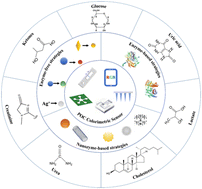
In the context of the growing need for decentralized diagnostics, the colorimetric method emerges as an ideal candidate for point-of-care (POC) applications due to its distinct advantages, such as simple operation, cost effectiveness, rapid responses, and intuitive results. In recent years, with the rise of nanotechnology and artificial intelligence, intelligent, efficient, and portable colorimetric biosensors have become widespread in many fields. Particularly, these biosensors are also attractive for detecting small molecule metabolites, which serve as critical clinical biomarkers for disease diagnosis and treatment monitoring. Therefore, this review aims to summarize the recent progress in POC colorimetric biosensors for detecting these metabolites. At first, we introduce the principles and components of POC colorimetric biosensors. Subsequently, we discuss the recent applications of these colorimetric biosensors for the detection of different metabolic biomarkers, such as glucose, uric acid, creatinine, and so on. Finally, we conclude with a perspective on the future developments of these biosensors.
- This article is part of the themed collection: Nanobiosensors
 Please wait while we load your content...


