


 PLATFORM UPDATE:


Integrated CO2 capture and methanation over inorganic dual-functional materials: from mechanism to reactor
 *b
Ningqiang
Zhang
*a
*b
Ningqiang
Zhang
*a
Abstract
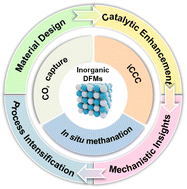
The urgency of climate mitigation has shifted CO2 management from isolated capture or utilization to integrated carbon cycling. In situ CO2 methanation offers a chemically coherent route by converting captured CO2 into methane through hydrogenation with renewable hydrogen, eliminating intermediate purification and compression. Inorganic dual-functional materials (DFMs), which integrate CO2 adsorption and catalytic hydrogenation functions within a single matrix, are central to enabling this concept by synchronizing capture and conversion. This review begins with a systematic overview of CO2 capture, with a focus on inorganic solid-state materials and their inherent performance trade-offs. It then examines the conceptual framework and latest advances in integrated carbon capture and conversion (iCCC) over DFMs, focusing on mechanistic understanding, interfacial synergy, intermediate speciation, and material design strategies. Subsequently, the review explores process intensification strategies for in situ methanation, from reactor configurations to system integration. This review focuses on inorganic DFMs as the key enabler, delivering mechanistic understanding and intensification strategies to advance efficient integrated CO2 capture and methanation.
- This article is part of the themed collection: CO2 capture and utilisation
 Please wait while we load your content...


