


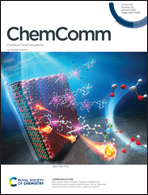
Pristine metal–organic frameworks and their composites as anodic electrocatalysts for anion exchange membrane water electrolysis

Abstract
Anion exchange membrane water electrolyzers (AEMWEs) are regarded as a promising solution for green hydrogen generation, owing to their cost-effectiveness, outstanding electrolysis efficiency, robust operation, and fast response. However, the sluggish kinetics of the anodic oxygen evolution reaction (OER) severely limits the water electrolysis efficiency. Currently, precious-metal based oxides, such as IrO2 and RuO2, are used as benchmark catalysts for the OER. Yet, their scarcity and poor long-term durability severely hinder their industrial-scale application. Over the past few decades, metal–organic frameworks (MOFs) have emerged as ideal candidates for fabricating low-cost and high-performance electrodes owing to their exceptional physicochemical features. In this review, we focus specifically on pristine MOFs and their composites, aiming to highlight their inherent structural advantages toward water electrolysis. We first introduce the fundamentals of the alkaline OER and the evaluation criteria toward both the OER and AEMWEs. We then summarize recent advances in pristine MOFs and their composites for the OER. Finally, we discuss current research challenges and suggest future research directions.

- This article is part of the themed collection: ChemComm Electrocatalysis
 Please wait while we load your content...


