


 PLATFORM UPDATE:


Preparation of covalent organic frameworks coated with cell membranes for precise analysis of cancer exosomes
Genxi
Li  de
de
de
Abstract
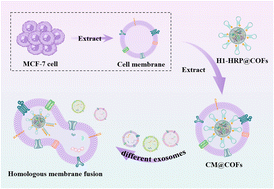
In this study, we have developed an electrochemical biosensor based on cell membrane-coated covalent organic frameworks for the selective detection of homologous exosomes. The biosensor can achieve a detection limit as low as 27 particles per µL. Moreover, it can effectively differentiate serum samples from patients with triple-negative breast cancer and luminal A breast cancer subtypes.
- This article is part of the themed collections: Chemical Communications HOT articles 2026 and Chemistry for Global Health
 Please wait while we load your content...


