


 PLATFORM UPDATE:


Flexible metal–organic frameworks: Frontiers in dynamic pore engineering for adsorptive separation
 *ab
*ab
Abstract
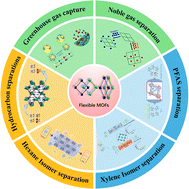
Flexible metal–organic frameworks (FMOFs), renowned for their stimuli-responsive “breathing” and “gating” capabilities, offer a groundbreaking, low-energy alternative to traditional thermal-driven separation processes. Despite their potential, the practical deployment of FMOFs has encountered significant hurdles, primarily due to inherent limitations such as structural instability and co-adsorption issues stemming from their excessive flexibility. This review comprehensively outlines recent pioneering strategies devised by researchers to surmount these challenges, with a particular emphasis on “dynamic pore engineering” techniques, including pore functionalization and controlled interpenetration. These methods enable precise modulation of framework flexibility while preserving high selectivity, thereby optimizing performance. The review delves into an in-depth analysis of the remarkable efficacy of FMOFs in crucial gas separations and in handling challenging liquid organic mixtures, exemplified by hexane and xylene isomers. Its examination underscores the critical, synergistic influence of external stimuli—such as temperature and pressure—alongside guest molecules, in orchestrating separation mechanisms. Furthermore, it highlights the indispensable role of advanced in situ characterization techniques and theoretical modeling, as employed by scientists, in elucidating the microscopic mechanisms underlying dynamic phase transitions. Finally, the review provides a forward-thinking perspective on the challenges associated with transitioning FMOFs from laboratory research to industrial application. These challenges encompass green synthesis methods, shaping processes, and ensuring long-term stability, all of which require concerted efforts from the research community. By addressing these issues, this review aims to serve as a blueprint for the design of next-generation intelligent separation materials, paving the way for their widespread adoption and impact in broader scientific and industrial arenas.
 Please wait while we load your content...


