


 PLATFORM UPDATE:


Mainstream modification strategies for improving Au-based catalysts towards photocatalytic CO2 hydrogenation to methanol
 *a
Yiming
Lei
*b
*a
Yiming
Lei
*b
Abstract
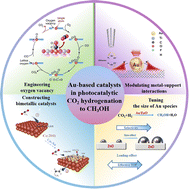
Photocatalytic CO2 hydrogenation to methanol (CHM) can directly convert solar energy into the high-value-added product methanol (CH3OH) through a green chemistry method, offering a sustainable and environmentally friendly route to solve the energy crisis and thus contributing to carbon neutrality. Among the various photocatalytic platforms, Au-based catalysts have shown great potential in photocatalytic CHM due to their unique electronic, optical, and catalytic properties. However, Au nanoparticles (NPs) often suffer from various drawbacks in Au-based CHM systems. Some dominant strategies include engineering oxygen vacancies (Ov), introducing metal–support interactions (MSIs) effects, regulating the size of Au species, and constructing bimetallic catalysts. Accordingly, this review summarizes representative works for the aforementioned strategies so as to highlight their roles and discuss the underlying enhancement mechanisms. This review is expected to provide insight that will stimulate further in-depth and novel research on Au-based photocatalysts.
 Please wait while we load your content...


