


 PLATFORM UPDATE:


Understanding insulin-like peptide 5 (INSL5) and relaxin family peptide receptor 4 (RXFP4): structure, signalling, and function

Abstract
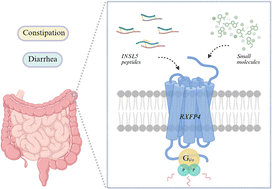
Insulin-like peptide 5 (INSL5) is a member of the relaxin/insulin peptide family, predominantly produced by enteroendocrine L cells in the distal gut. Although initially characterised based on its structural similarity to insulin and relaxin peptides, INSL5 is now increasingly recognised as an important regulator of gastrointestinal physiology. Its endogenous receptor, relaxin family peptide receptor 4 (RXFP4), is primarily expressed in the gastrointestinal tract and signals mainly through Gi proteins. Recent studies have provided compelling evidence that the INSL5-RXFP4 signalling axis is an important regulator of colonic motility. In this review, we summarise current knowledge of the structure–function relationships of INSL5 and RXFP4, advances in the design of INSL5 analogues, and the signalling mechanisms underlying receptor activation. We also discuss the physiological and pharmacological evidence supporting a role for INSL5-RXFP4 signalling in colonic motility and highlight opportunities for the development of chemical probes and therapeutic leads targeting this system for the treatment of chronic constipation.
 Please wait while we load your content...


